
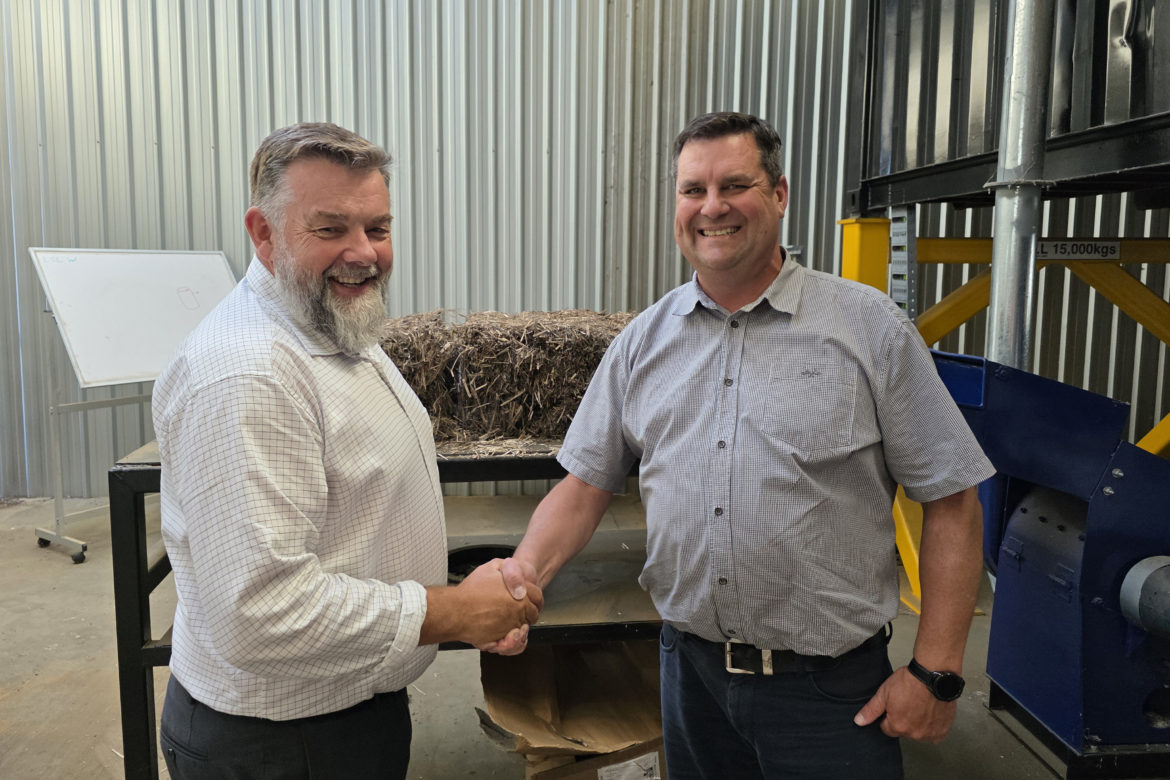
Above: Kelvin Wright, CE of Venture Taranaki, with Cameron Prestidge from Egmont Air who solved their hemp processing dust extraction challenge.
Taranaki is at the forefront of something genuinely exciting — New Zealand’s emerging hemp industry. Te Puna Umanga Venture Taranaki has been developing a hemp hub for the region as part of their land use diversification project, Branching Out – and a major milestone was recently reached with the arrival of Taranaki’s first pilot-scale hemp fibre processing unit. Capable of processing 90 hectares of hemp fibre per year, it’s set to supply locally grown and processed fibre for hempcrete and other construction applications. But getting a brand-new processing plant up and running isn’t without its challenges — and hemp processing dust extraction turned out to be one of the biggest hurdles to overcome.
A New Industry, A New Problem
Hemp processing is not like processing most other agricultural products. Hemp fibre is notoriously dusty, and when the plant first began operating, it quickly became clear that the existing system wasn’t managing the dust effectively. As Kelvin Wright, Chief Executive at Venture Taranaki, explains: “After importing a new machine to support hemp production we had a problem with dust control, after trialling some practical adjustments with no success it was clear we needed expert advice.”
The primary concern, as identified in Egmont Air’s preliminary evaluation, was fugitive atomised dust spreading from the process equipment into the operational working area. This wasn’t just a nuisance — it posed a serious respiratory health risk to workers and created the potential for an explosive atmosphere. Combustible dust explosions are a well-documented industrial hazard, and fine organic dusts like those produced during hemp fibre processing can be particularly dangerous if allowed to accumulate or remain suspended in the air.
Venture Taranaki needed a solution — and fast.
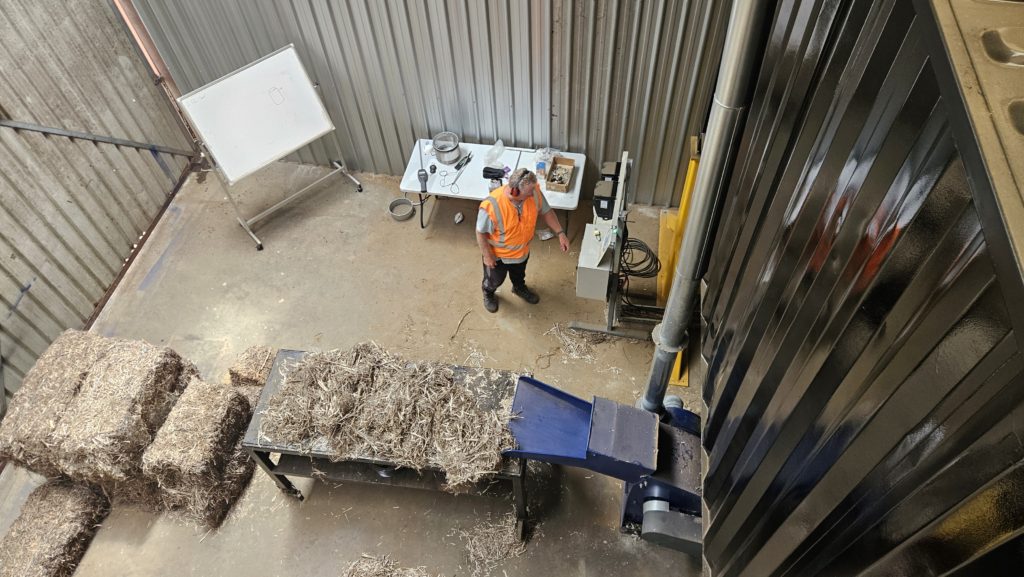
Above: Hemp processing in action for Venture Taranaki’s Branching Out project.
A Local Solution, Found Close to Home
Kelvin’s project manager reached out to Egmont Air — a call that came with no prior relationship or knowledge of what Egmont Air could offer. “This was a complete cold call with no knowledge or understanding of this local capability,” Kelvin notes. What followed set the tone for the entire engagement.
“Cameron’s immediate response and offer of support was the start of an exceptional customer experience. Cameron turned up to site within 24hrs, met our team, reviewed the set up, and took time to talk us through his observations and educate our team on the technical theory of dust handling.”
That kind of response — arriving on-site within a day, taking the time to explain what was happening and why — reflected the urgency of the situation and Egmont Air’s commitment to getting Venture Taranaki into production as quickly as possible.
On-Site Testing and Investigation
Rather than simply recommending off-the-shelf equipment, Cameron started by understanding the root cause of the problem. As Kelvin describes it: “He immediately rolled up his sleeves, grabbed his technical equipment and took air flow and pressure measurements to help inform a solution.”
This diagnostic approach is essential when dealing with a new or non-standard industrial process. Hemp processing equipment doesn’t follow a standard template, and dust behaviour can vary significantly depending on the type of fibre being processed, the machinery involved, and how the plant is laid out. Effective hemp processing dust extraction means understanding the specific dynamics of that particular system — not applying a generic fix and hoping for the best.
Developing the Right Solution
Based on the on-site testing and evaluation, Cameron produced a full technical report identifying the cause of the dust problem and proposing a solution. But Egmont Air’s support didn’t stop there.
“This included an offer to provide some additional equipment to trial the solution, allow us to enter production, and refine the scope of the permanent solution,” says Kelvin. “This included providing staff to help install and then a follow up visit to help tune settings and get us into production within a very short timeframe.”
For a pioneering facility working to tight timelines, this kind of practical, hands-on support made all the difference. Rather than waiting for a permanent solution to be designed, procured and installed, Venture Taranaki was able to get into production while the full solution was being refined — with Egmont Air alongside them every step of the way.
The verdict from Kelvin and his team? “We were blown away by the service, customer experience, and the degree with which Egmont Air went above and beyond to support a regional initiative.”
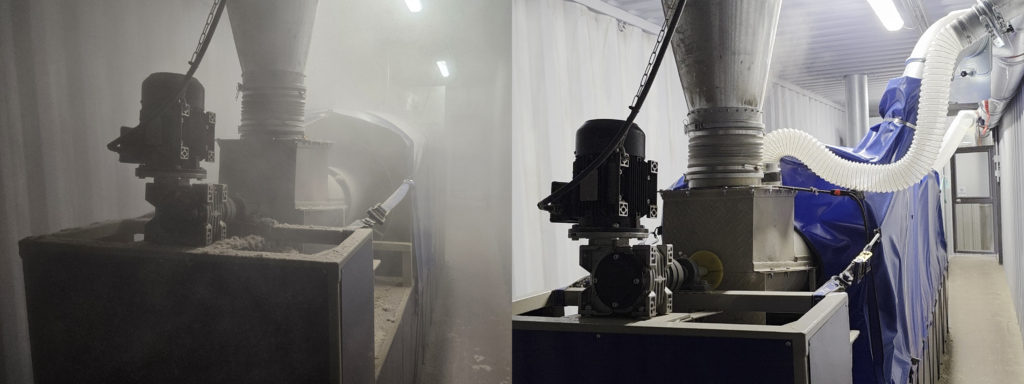
Above: Before and After installation of the New Egmont Air System
Why Dust Extraction Matters in Hemp Processing
Hemp hurd fibre — the woody core material used in hempcrete — generates significant dust during processing. Fine organic dust particles can remain suspended in the air for extended periods, creating both a respiratory hazard for workers and, if concentrations become high enough, a risk of deflagration (combustible dust explosion).
WorkSafe New Zealand’s guidelines are clear on the obligations employers have to manage airborne contaminants in the workplace. For a facility like this one — the first of its kind in Taranaki — getting the dust extraction right from the outset isn’t just about compliance. It’s about building an operation that can run safely at scale as the industry grows.
With demand for hempcrete and hemp fibre products growing rapidly both domestically and internationally, having reliable dust extraction infrastructure in place is a key part of making this industry viable for the long term.
Taranaki Looking After Its Own
There’s a bigger story here too. This project is a great example of what’s possible when local businesses support local industry. Venture Taranaki has been building the groundwork for a hemp industry in the region — running fibre cultivation trials, supporting builder training in hempcrete construction, and investing in processing infrastructure. When a problem arose, the answer was found right here in Taranaki.
Kelvin’s closing words put it well: “Thank you Cameron and Team — another great local business quietly going about their work supporting local industry with exceptional service.”
Ross Beaven, Project Manager of Branching Out at Venture Taranaki, echoed that sentiment: “It has been about practical application of a lot of knowledge and experience. If we had sourced just technical support remotely from elsewhere we just wouldn’t be where we are today.”
Getting industrial processes right in the early stages of a new industry sets the standard for how that industry develops. By addressing the dust and air quality issues now, the plant is better placed to scale up safely and efficiently — and Taranaki’s hemp industry is one step closer to realising its potential.

Above: Hemp Wool produced at the Taranaki hemp fibre processing unit.
Frequently Asked Questions
Why is dust extraction so important in hemp processing? Hemp fibre processing generates fine organic dust that can pose serious respiratory risks to workers and, at sufficient concentrations, create a risk of explosive atmosphere. Effective dust extraction captures dust at the source and maintains safe air quality in the working environment.
What is fugitive atomised dust? Fugitive atomised dust refers to fine dust particles that escape from process equipment into the surrounding working area rather than being contained or extracted. In industrial settings, this can be both a health hazard and a safety risk.
What testing does Egmont Air carry out before recommending a solution? Egmont Air conducts on-site pressure and airflow testing to understand how air is moving through a system and identify where dust is escaping. This diagnostic approach ensures any solution is designed around the actual conditions of the specific plant, rather than a generic fix.
Can Egmont Air help with dust extraction for new or non-standard industrial processes? Yes. Egmont Air works across a wide range of industries and is experienced in evaluating and solving dust and fume extraction challenges in new, unusual, or complex processing environments.
What are the risks of inadequate dust extraction in a hemp processing facility? Inadequate dust extraction can lead to respiratory health issues for workers from prolonged dust exposure, as well as the potential for combustible dust explosions if fine organic dust accumulates in the air at dangerous concentrations.
Get Expert Advice on Industrial Dust Extraction
If your facility is dealing with dust or fume extraction challenges — whether you’re running an established operation or setting up something new — Egmont Air can help. Get in touch with our team to discuss your situation.