Overview
When premium fiberglass boat builder Rayglass Boats moved to their new manufacturing facility in Auckland, Egmont Air designed and installed a comprehensive fiberglass boat factory extraction system. The production environment has improved both product quality and workplace safety.
About Rayglass Boats
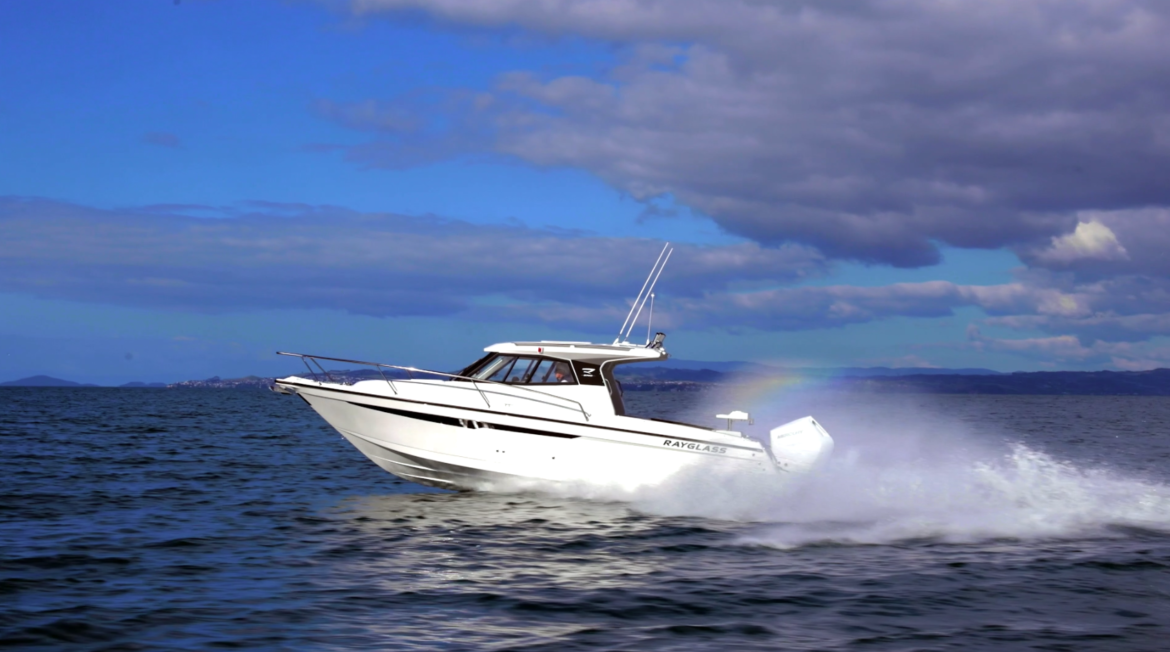
Since 1985, Rayglass Boats has been recognised as a leading designer and manufacturer of high-quality, award-winning power boats. Their Legend range has become New Zealand’s most awarded boat to date, while their Protector range serves demanding commercial and recreational users worldwide. With a reputation built on innovation and commitment to quality, Rayglass needed extraction systems that matched their world-class manufacturing standards.
The Challenge
Fiberglass boat manufacturing presents unique environmental challenges. As Rayglass CEO Dean Harris explains:
“Fiberglass is a very sensitive product with a high-quality finish, so things like dust mitigation and temperature control during the manufacturing process are key to our production.”
The new facility in Mount Wellington required comprehensive solutions for three critical areas: laminating rooms where vessels begin their creation, gel coating operations, and grinding bays where concentrated dust generation occurs. Each area presented distinct extraction challenges requiring specialised approaches.

The Egmont Air Solution
Building on our successful 2009 installation at Rayglass’s previous facility, Egmont Air designed an up-sized, integrated extraction system specifically engineered for the new manufacturing space. The fiberglass boat factory extraction solution encompasses multiple interconnected systems:
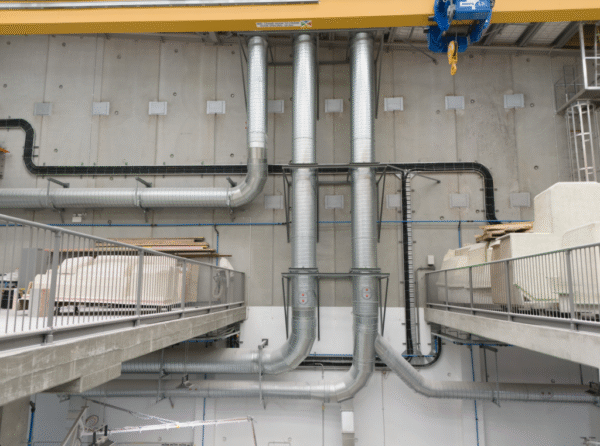
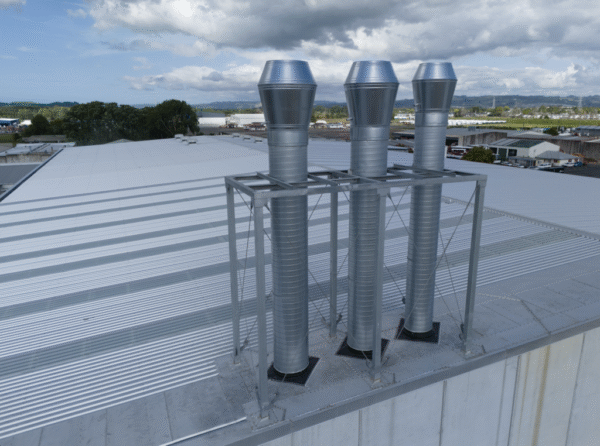
Laminating Room Extraction: Eight Egmont open-face booths provide large work-face areas for operators completing the laminating process. These units create a cross-flow air pattern that extracts air across the working zone, protecting operators’ breathing zones while fumes are extracted and discharged safely to atmosphere through 6-metre stacks above the roofline.
LPG Heating System: Two independently operated Egmont heating systems supply fresh air through stainless-steel heat exchangers, each rated at up to 220kW. This provides approximately 20°C temperature rise during cooler months – critical for maintaining consistent chemical reactions and curing times.
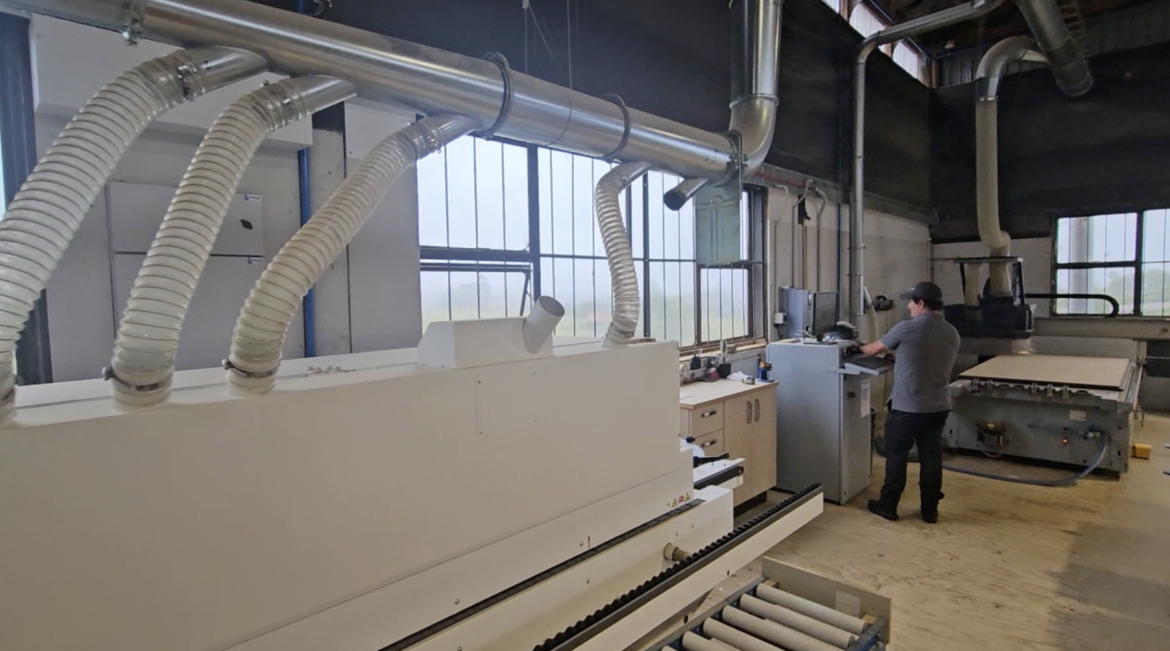
Grinding Bay Extraction: Four extraction plenums connected to externally mounted Egmont cartridge dust collectors handle the concentrated dust generation in grinding operations. This leading filtration technology offers high efficiency even on micron particles, with automatic reverse-pulse cleaning to maintain optimal performance.
The Results
The benefits have been immediately noticeable. Dean Harris notes:
“One of the first things people notice if they’re familiar with a fiberglassing process is the smell, which is caused by the styrene emitted off the product. With our new system, people walking in fresh barely notice it.”
The heating system has proven particularly valuable for maintaining year-round production.
“The building itself is essentially a big concrete box,” Dean explains. “Whilst it doesn’t get particularly cold in Auckland, temperatures do drop into single digits. For us to maintain lamination through those colder days is key. If it’s too cold, the chemicals don’t react and curing time is much longer. Being able to have consistency through the winter months has been key for us to maintain and grow our production.”
Rayglass CEO Dean Harris sums up the project:
“From a business point of view, I cannot recommend enough Egmont Air for their professionalism and guidance in helping with such a project. The system itself is world class, and it’s been a key part of the success of our project.”
System Highlights
The fiberglass boat factory extraction installation includes several advanced features:
- Independent system operation allowing flexible production scheduling
- Variable frequency drives for adjustable airflow
- Automatic roof fan integration for fresh air replacement
- Cartridge filtration technology with automatic cleaning
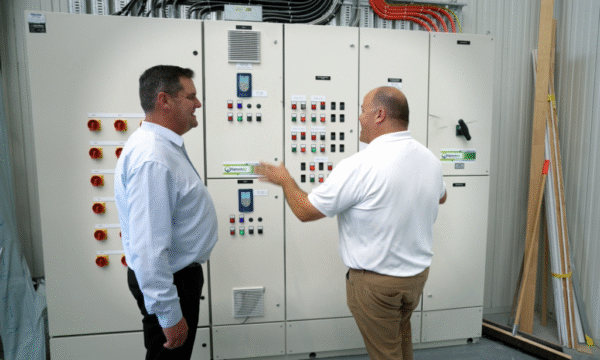
- Comprehensive control panel with safety interlocks and motor protection
- Guaranteed high filtering efficiencies meeting environmental standards
Frequently Asked Questions
What extraction is needed for fiberglass boat manufacturing?
Fiberglass boat factories typically require extraction for three main areas: laminating rooms to remove styrene fumes, gel coating areas for overspray and vapour control, and grinding bays for dust collection. Each area needs a different approach – laminating uses cross-flow ventilation to protect breathing zones, while grinding requires high air-change ratios with cartridge filtration.
Why is heating important in fiberglass production?
Temperature control is critical because fiberglass resins need consistent temperatures to cure properly. When temperatures drop, chemical reactions slow down and curing times increase significantly. Heated air supply systems maintain production consistency through winter months, allowing year-round manufacturing without delays.
How do you remove styrene smell from a fiberglass factory?
Styrene fumes are heavier than air, so extraction systems use cross-flow air patterns that draw fumes away from operators and discharge them safely to atmosphere through elevated stacks. Fresh air replacement through inlet fans and louvres creates constant airflow that prevents fume buildup. Additional filtration or neutralising systems can be added if required.
Whether you’re building boats, pools, or composite products, Egmont Air has the expertise to design and install extraction systems that protect your workers, improve product quality, and maintain production efficiency year-round.
Ready to discuss your fiberglass extraction needs? Contact us today to arrange a consultation.