Overview
KiwiRail keeps freight moving across New Zealand, and maintaining its locomotives and wagons means welding is part of daily work. The components team needed a welding fume extraction system that would capture fumes at the source and keep operators breathing clean air. Egmont Air designed, supplied and installed a system matched to their workshop.
Why welding fume extraction matters for rail maintenance
KiwiRail’s maintenance team manages the whole-of-life care of the rolling stock fleet, from engineering and commissioning through to component repair. Welding and fabrication sit at the heart of that work, and welding produces fine airborne particles that are harmful to health.
All welding fumes are hazardous, regardless of the metal being worked, and WorkSafe NZ has stated there is no known safe level of exposure. Under the Health and Safety at Work Act 2015, employers must control that exposure using engineering controls such as local exhaust ventilation (LEV) or fume extraction at or near the source. A properly designed welding fume extraction system is the most effective way to meet that duty while keeping operators safe and productive.
The system Egmont Air designed for KiwiRail
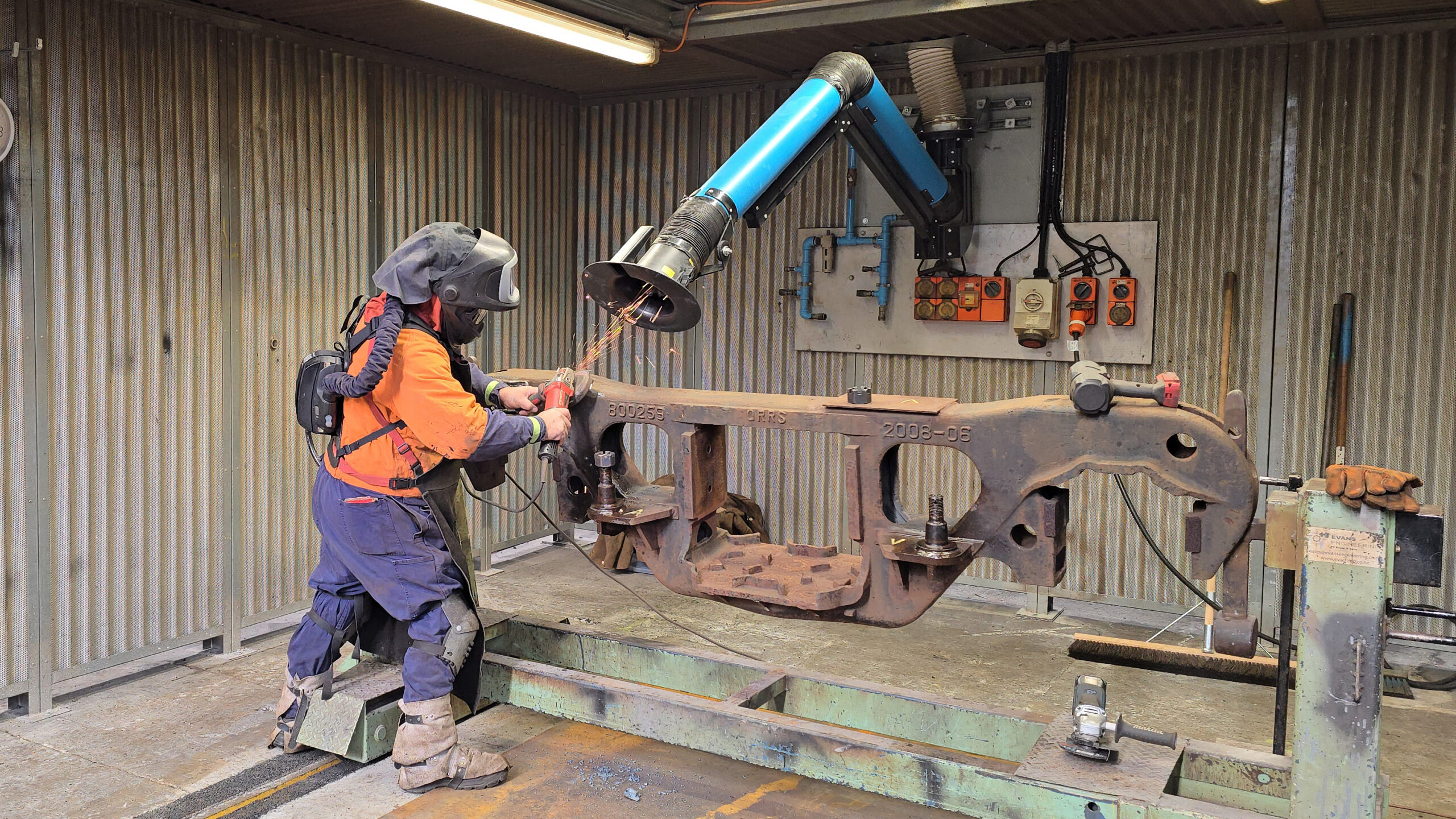
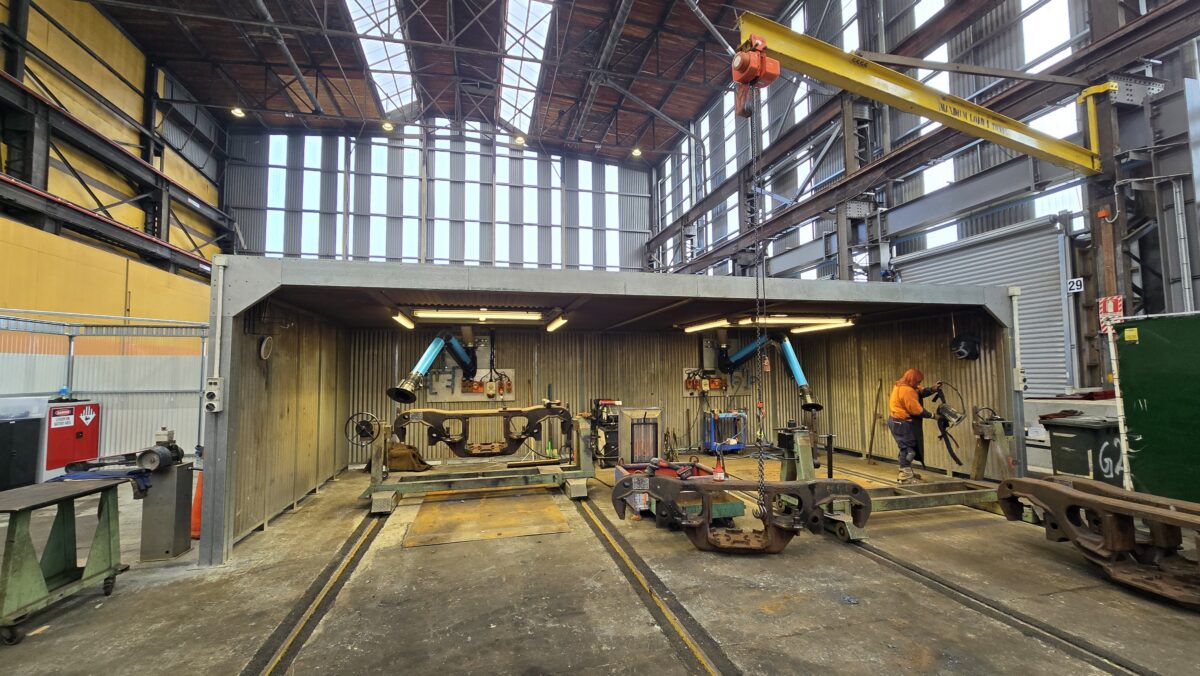
The brief was to capture welding fumes right where they are generated, before they reach the operator’s breathing zone or drift through the workshop. The installed system pairs source-capture extraction arms with a standalone filtration unit, so there is no reliance on external ducting runs.
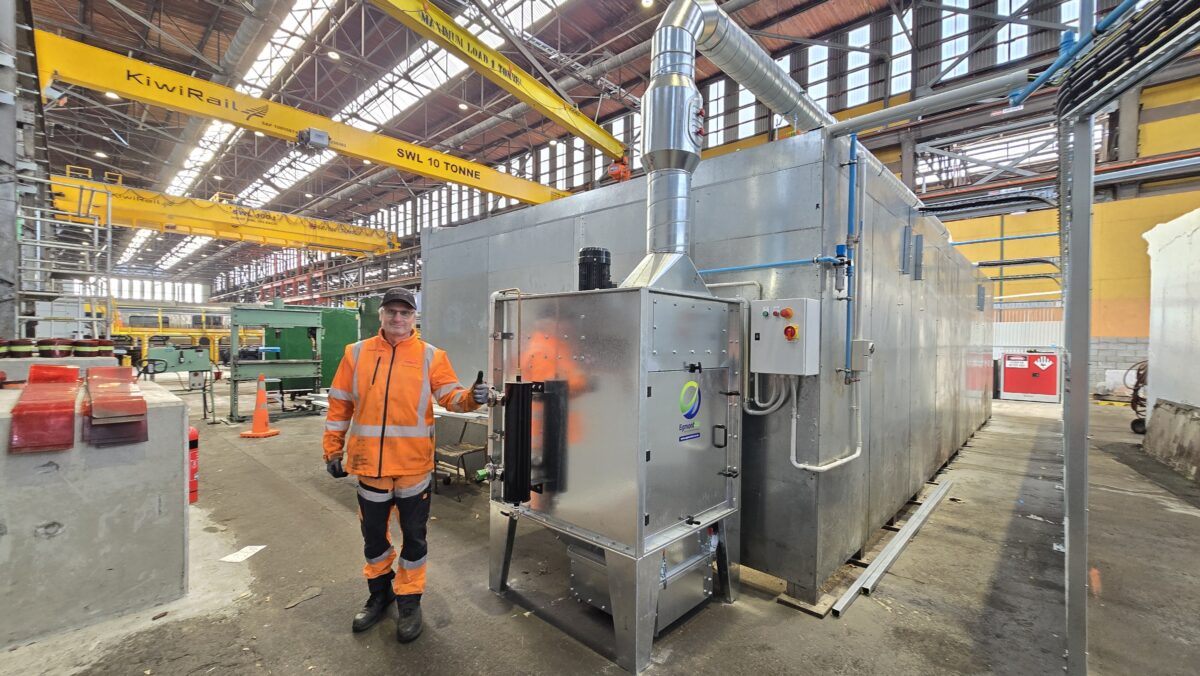
Driving the system is the Egmont CDC4 / 4.0Hp filtration system. It runs a powerful 4.0Hp three-phase integral fan with washable, high-efficiency cartridge filtration, and cleans itself automatically using reverse-pulse compressed air so it stays at full performance through long working days. A removable dust bin makes disposal quick, and the heavy-duty construction is built for an industrial environment like a rail maintenance workshop.
Two Evolution articulating arms give operators source capture exactly where they need it. Each arm carries a large capture hood that moves smoothly on an externally mounted gas-strut mechanism and holds its position over the work. The airflow is calibrated so it removes toxic particles without disturbing shielding gases, which keeps weld quality high. A butterfly damper on each arm lets the airflow be tuned for sensitive processes such as TIG.
A spark arrestor sits in the system to capture sparks and hot particles before they reach the filter, an important safeguard in any welding fume extraction setup. Welding throws off hot sparks and molten spatter that can be drawn into the extraction arm, where the filter media is highly combustible. The spark arrestor intercepts those embers before they reach the filters, preventing fires that could destroy expensive machinery and protecting the filters from the burn damage that shortens their life. It also guards against internal fires that can smoulder undetected and put nearby operators at risk.
The result for KiwiRail’s operators
With the welding fume extraction system in place, fumes are captured at the source and filtered before they can spread through the workshop. Operators can weld safely, and the standalone design means the system can be positioned around the way the team works.
Here’s what KiwiRail had to say:
“The booth arms are exactly what we needed, and the installation standard is excellent. Our operators can now work safely and comfortably, with full assurance that all welding fumes and emissions are properly extracted and filtered.”
— Andrew Shipp, RSAS Production Engineer – Components
Is welding fume extraction a legal requirement in New Zealand?
Under the Health and Safety at Work Act 2015, employers must control workers’ exposure to welding fume so far as is reasonably practicable. WorkSafe NZ expects engineering controls such as local exhaust ventilation or source-capture fume extraction where workers are exposed, so for most welding operations a fume extraction system is the practical way to meet that duty.
What is source-capture welding fume extraction?
Source capture removes welding fume right at the point it is generated, before it reaches the operator’s breathing zone or spreads through the workshop. Articulating extraction arms with capture hoods are positioned close to the weld, which makes them far more effective than relying on general workshop ventilation alone.
Why does a welding fume extraction system need a spark arrestor?
Welding produces hot sparks and molten spatter that can be drawn into the extraction arm. Because the filter media inside the unit is combustible, a spark arrestor is needed to intercept those embers before they reach the filters, preventing fires and protecting the filters from burn damage.
Can a welding fume extraction system work without external ducting?
Yes. A standalone filtration unit, like the one installed for KiwiRail, draws fume through the extraction arms and filters it on the spot, so there is no need for long ducting runs to the outside. This makes the system easier to install and lets it be positioned around the workshop layout.
How do I choose the right welding fume extraction system?
The right system depends on your welding processes, the number of operators, your workshop layout and the materials being welded. Egmont Air assesses your site and designs a system matched to how you actually work, so fumes are controlled effectively without disrupting the job.
No matter the size of your welding operation, Egmont Air can design a welding fume extraction system that captures fumes at the source, protects your operators and helps you meet your obligations under New Zealand workplace safety standards.
Get in touch with the team today to discuss your site.