Overview
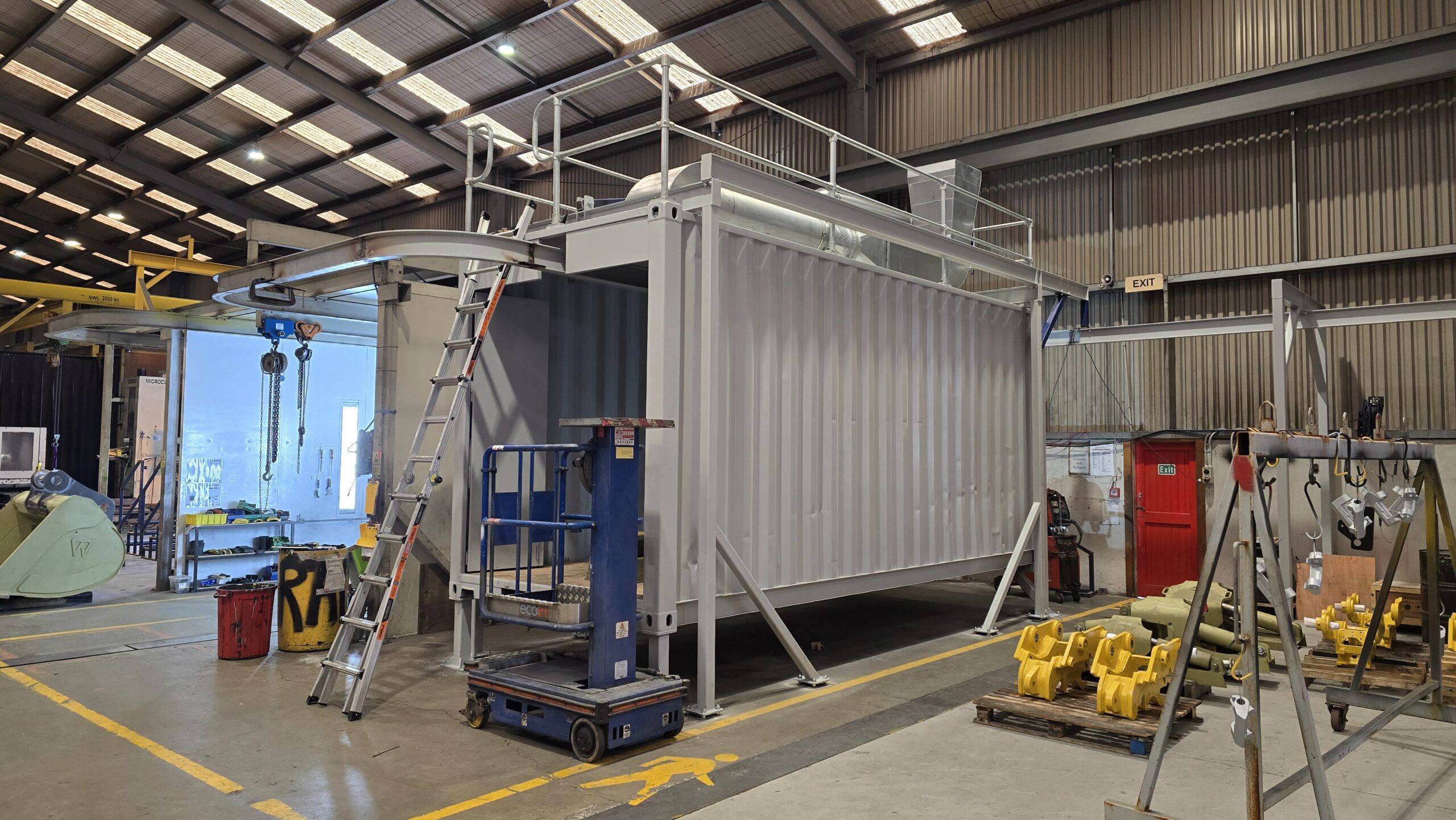
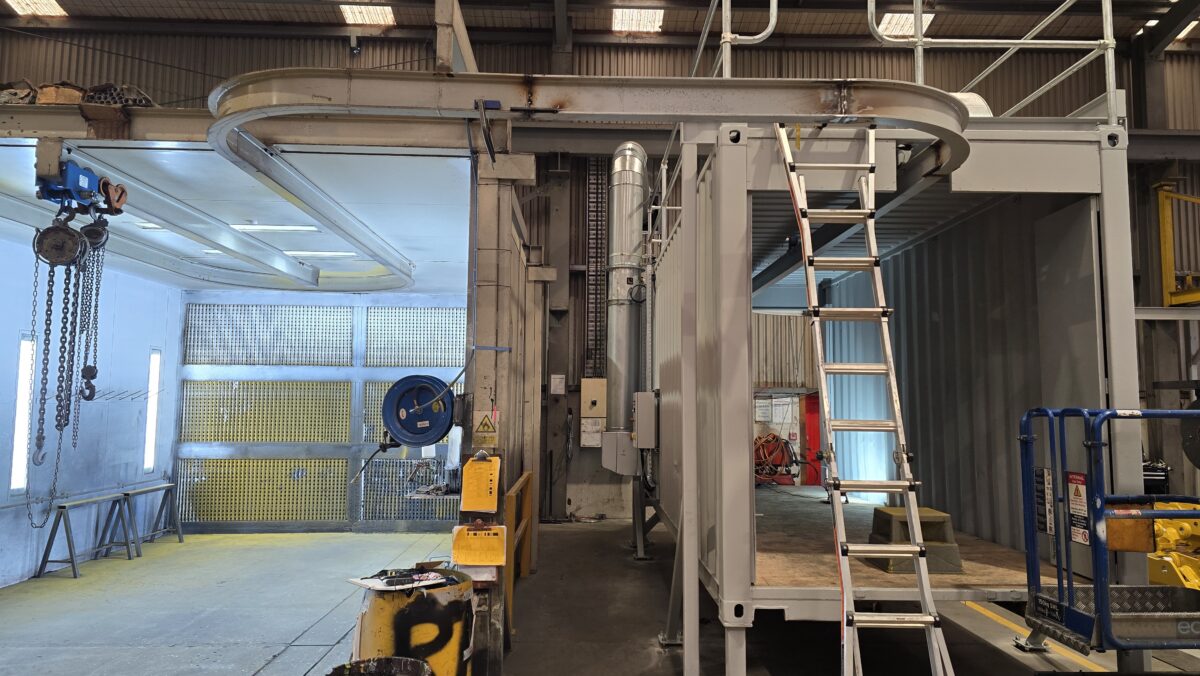
Wedgelock Equipment has been engineering excavator quick couplers and attachments in Upper Hutt for more than 35 years. When freshly painted products were taking up to a full day to dry in winter, Egmont Air relocated the company’s spray booth and installed a dedicated paint drying room. Drying now takes around one hour.
Slow drying was holding up production
Paint dries slowly in cold, damp air, and Wellington winters didn’t help. On colder days, Wedgelock’s attachments could sit for an entire day before the paint was dry enough to touch.
Until then, nothing could happen. Products couldn’t be handled, wrapped or moved on to dispatch, and every hour they sat waiting was another hour for dust to settle on a fresh finish. For a manufacturer whose products are built to a high standard, a dusty or damaged paint job isn’t an option.
Why spraying and drying need different conditions
Spray painting and drying are two separate jobs, and each needs a different kind of airflow:
- Spray painting needs 100% fresh air and a high rate of air change to quickly dilute and extract hazardous fumes.
- Drying works best with gentle airflow combined with gentle heat, typically 20–30°C.
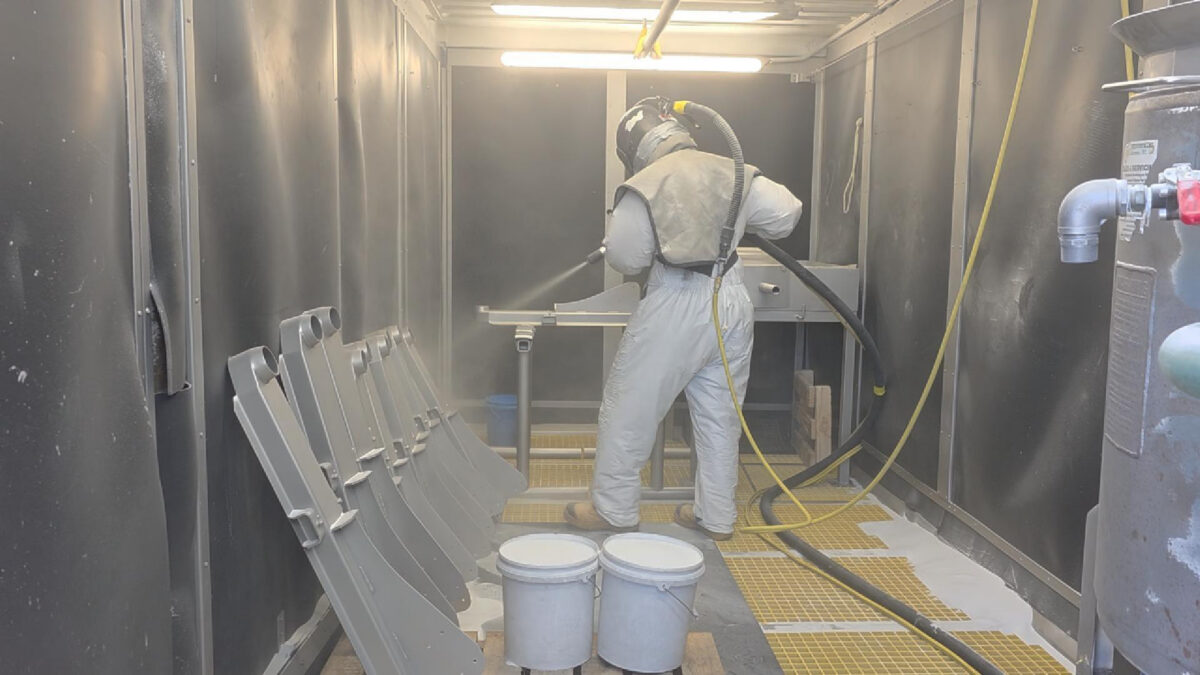
Giving each process its own space means both can run properly, and the spray booth is free for the next job while painted products dry next door.
What Egmont Air installed
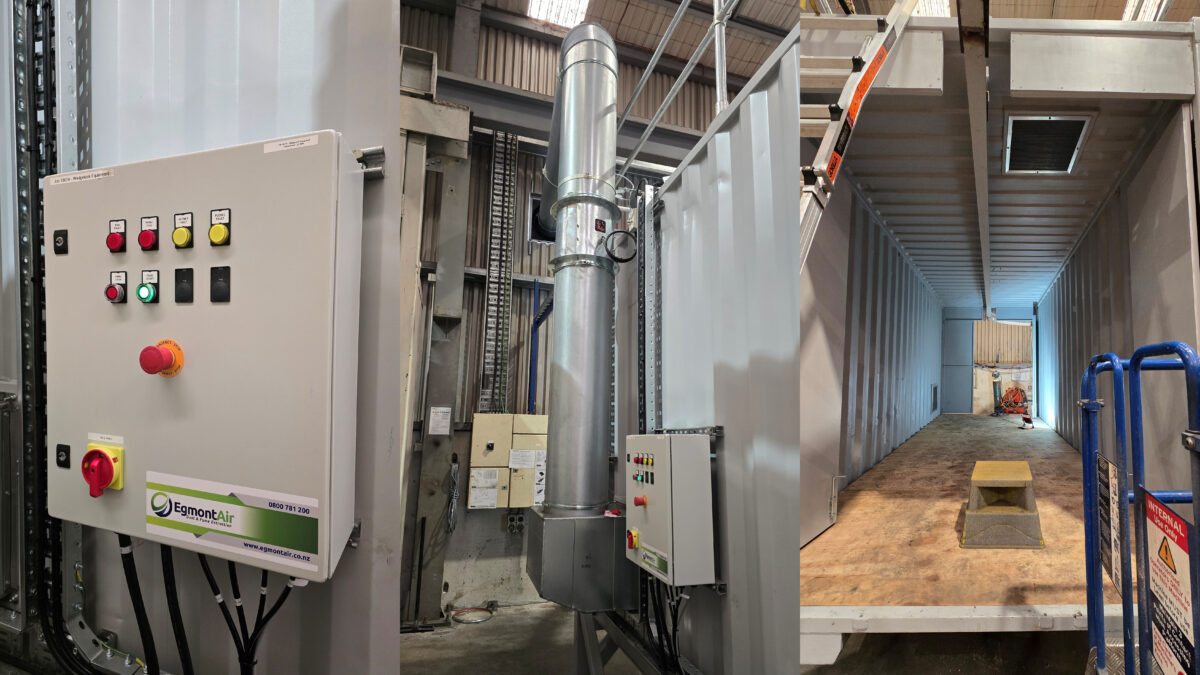
Egmont Air designed, supplied and installed a complete heating system for the paint drying room, including:
- Egmont Air Handling Unit (AHU)
- 22 kW electric heating
- Supply and extract fans
- Ducting with discharge to atmosphere
- 3-stage thermostat control
- Control board with safety controls
- On-site assembly, installation and commissioning
- Compliance and IQP Inspection to AS/NZS Standards
The paint drying room runs through a simple, automated sequence each time it’s used. Before the heating elements switch on, the AHU runs a purge sequence to clear the room. It then brings in heated air, raising the temperature by up to 20°C above the outside air. The 3-stage thermostat steps the heating up gradually towards the set temperature, depending on how cold the incoming air is. Because the system relies on a balance of airflow and moderate heat rather than high temperatures, energy use stays low.
The same heating system can also be used to pre-heat steel before painting, which helps paint adhere and cure on cold days.
Built to be safe and compliant
Paint drying rooms are classed as hazardous areas, so the design, controls and equipment must meet strict requirements. Wedgelock’s drying room was designed and installed to AS/NZS 4114, AS 1482 and AS 1940, with a zone 1 hazardous area design.
The safety controls include:
- Pre-purge on start-up and post-purge on shut-down
- Airflow monitoring on the fans
- Heater timer and thermostat control
- Motor overload protection
- Status and mode indication
What’s changed for Wedgelock
- Drying time has dropped from up to a full day to around one hour, even in winter.
- Products move through the workshop faster, so they can be handled, wrapped and dispatched sooner.
- Less waiting means less dust, protecting the quality of the paint finish.
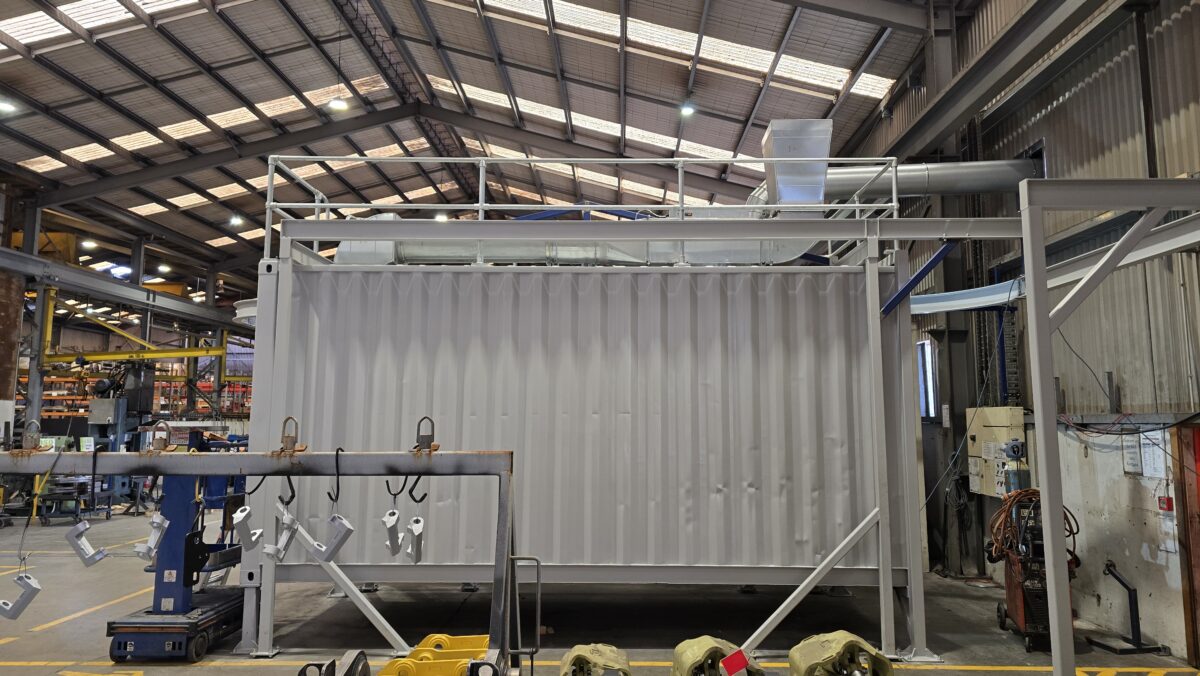
- The new layout works with the gantry crane, making it easy to move heavy attachments between the spray booth and drying room.
- The system is safe and compliant, with controls built in from day one.
Speed up your paint line
If slow drying is holding up your workshop, Egmont Air can design a paint drying room to suit your products, space and production goals. Get in touch to talk to our team.
Frequently asked questions
What is a paint drying room?
A paint drying room is a dedicated, enclosed space where freshly painted products dry using controlled heat and gentle airflow. It’s kept separate from the spray booth, so painting and drying can happen at the same time.
How much faster is a paint drying room than air drying?
It depends on the paint system, product size and outside temperature. At Wedgelock, drying time dropped from up to a full day in winter to around one hour.
Can I dry products in my spray booth instead?
Some spray booths include a heated bake cycle, which suits workshops with lower volumes or limited floor space. A separate drying room is a better fit when the booth needs to be free for the next job, or when drying time is creating a bottleneck.
Do paint drying rooms need to meet New Zealand standards?
Yes. Drying rooms are hazardous areas and should be designed and installed to the relevant standards, including AS/NZS 4114, AS 1482 and AS 1940, with appropriate safety controls.
Can heating be added to an existing room or container?
Yes. Egmont Air can supply a heating system to retrofit into an existing enclosure or 20-foot container, with ducting and controls designed to suit.