Overview
Sandblasting throws up more than just noise and mess. Fine abrasive dust fills the air fast, cutting visibility to almost nothing and putting operators at risk of breathing in harmful particles. Good dust extraction for sandblasting isn’t a nice-to-have — it’s what keeps a blast room safe to work in and keeps the job moving.
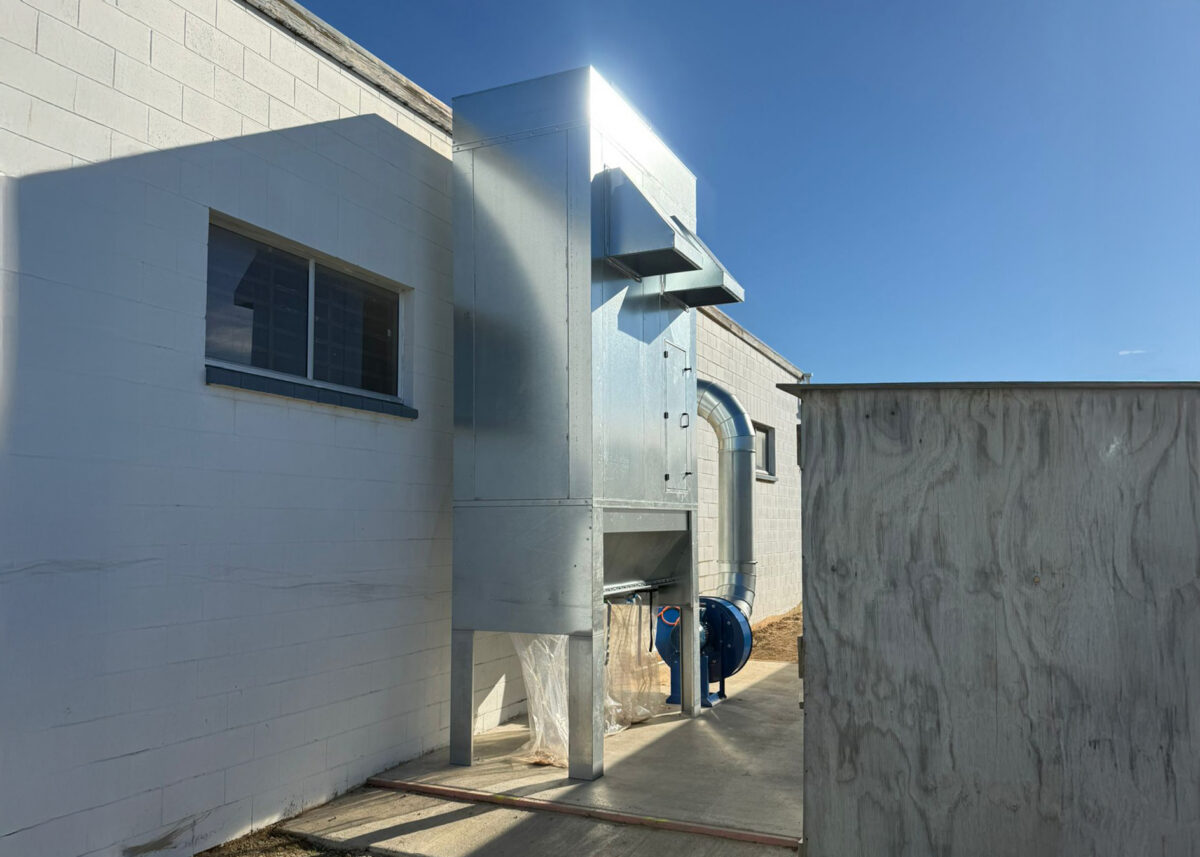
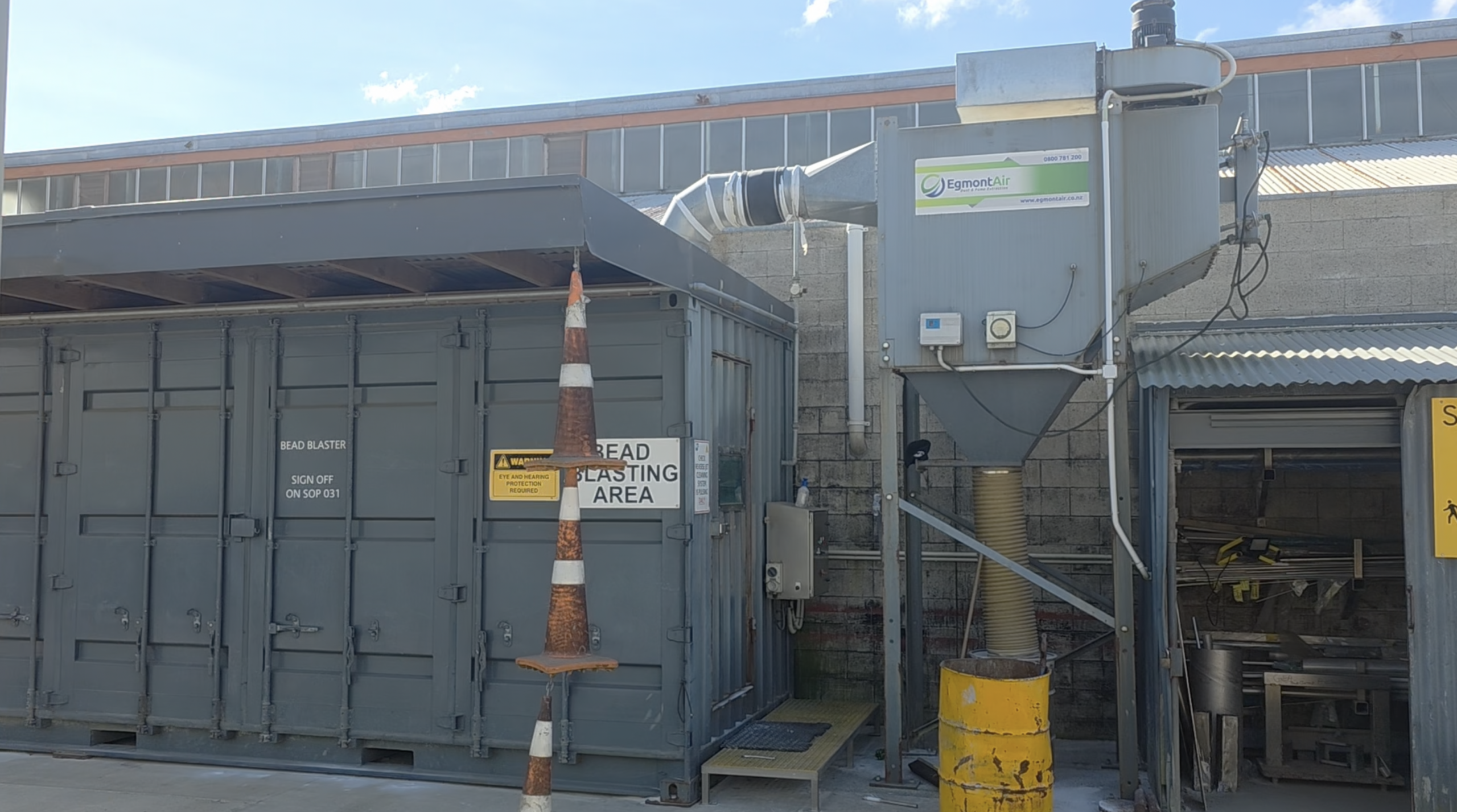
We recently installed a CDC cartridge dust collector for PFS Engineering at their Hamilton facility, purpose-built to clear the air in their sandblasting area.
About PFS Engineering
PFS Engineering is a New Zealand owned and operated engineering company based in Hamilton, delivering design, fabrication, contract manufacturing, and maintenance services across a wide range of industries, including food processing, dairy, civil engineering, forestry, and marine. Their sandblasting area is used to prepare steel and other components for coating and finishing as part of their broader fabrication work.
Why Dust Extraction for Sandblasting Matters
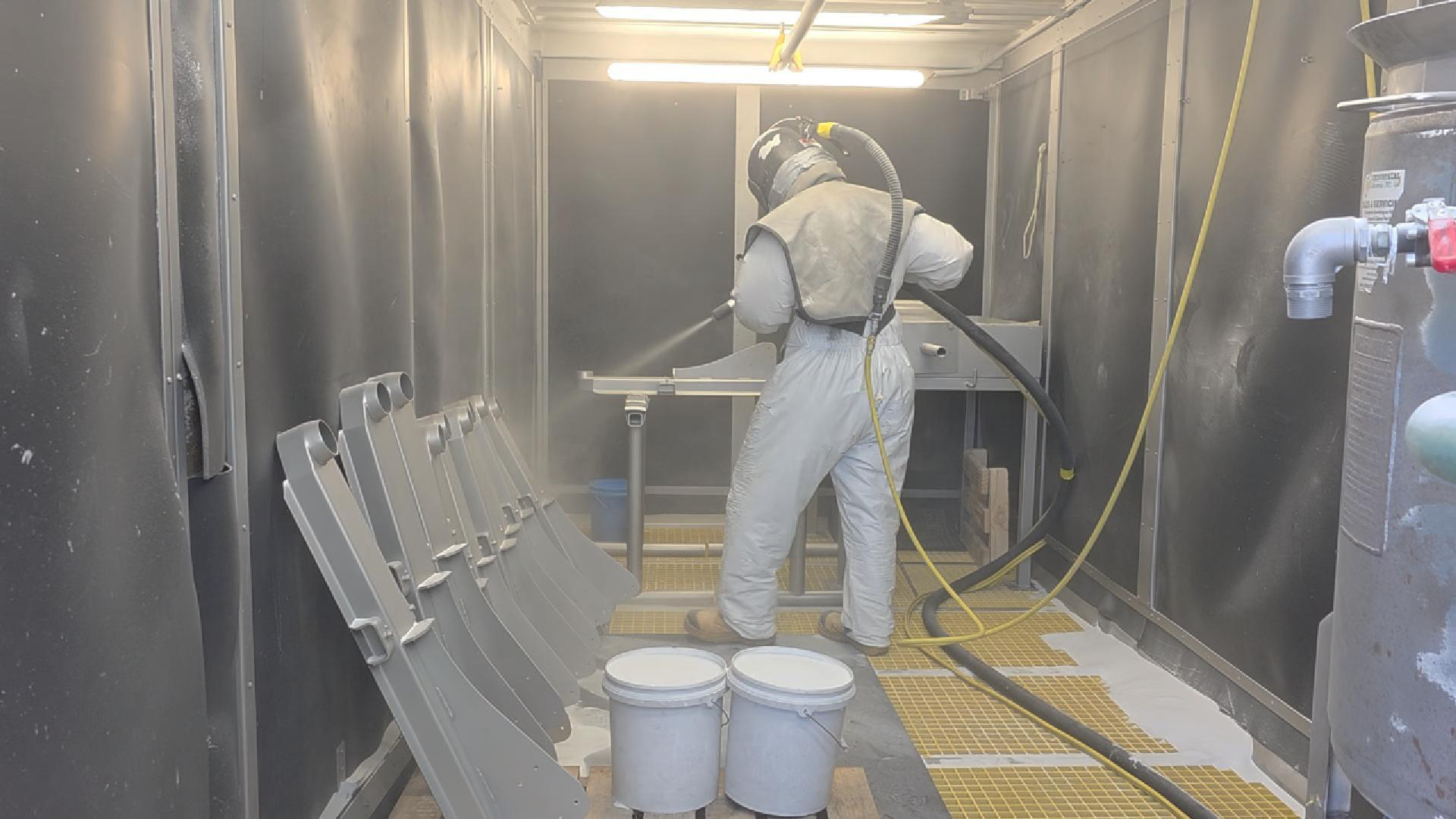
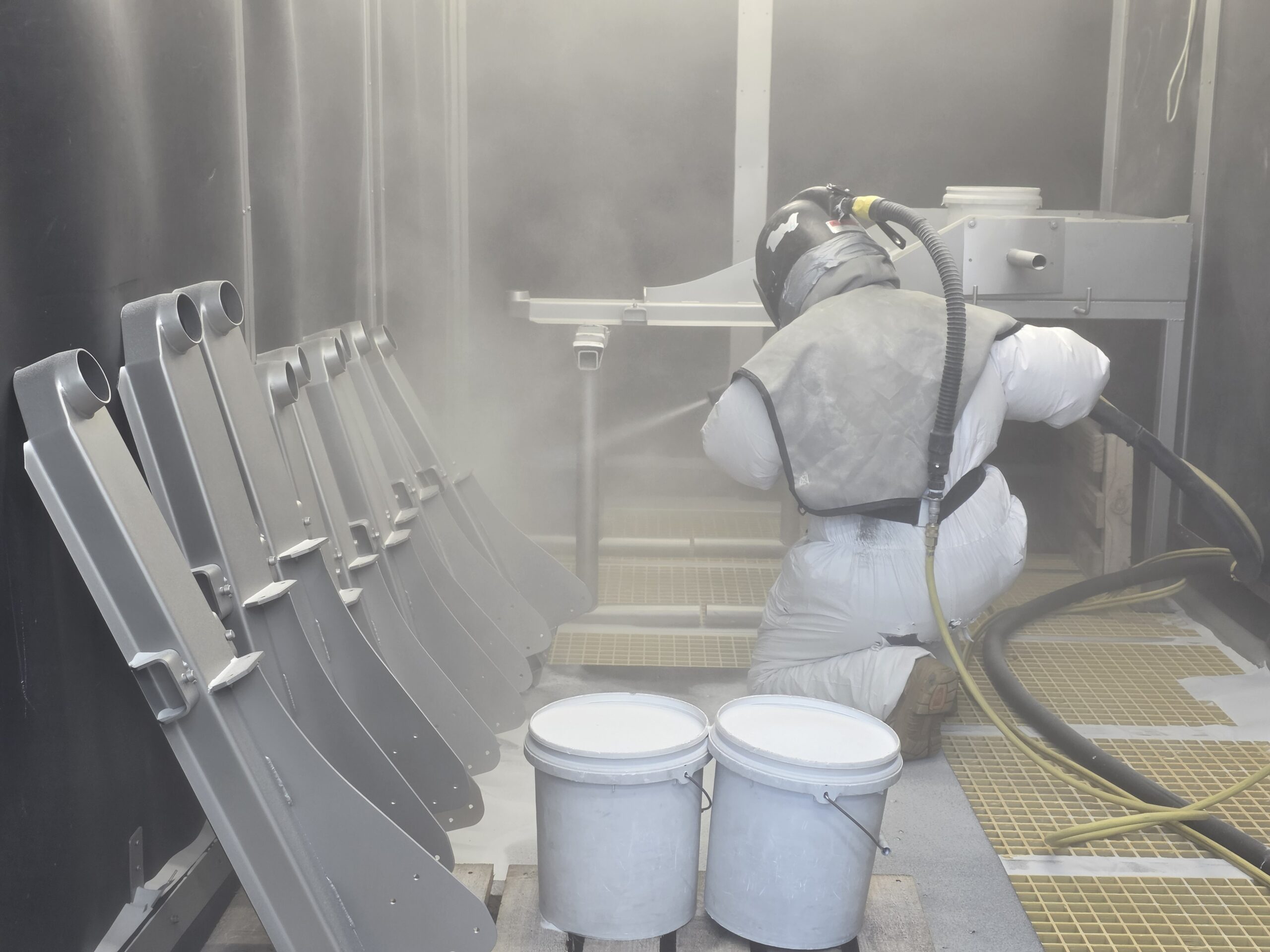
Abrasive blasting generates a constant stream of fine particulate as media strikes the work surface and breaks down. Without proper extraction, that dust hangs in the air, settles on freshly blasted surfaces, and builds up on gear and lighting. Operators end up blasting almost blind, which slows the job and makes it harder to get a clean, consistent finish.
There’s a health side too. WorkSafe NZ treats airborne dust from cutting, grinding, and blasting as a serious workplace hazard — respirable particles can lodge deep in the lungs, and where silica-containing media or substrates are involved, the risk of long-term lung disease is real. Under the Health and Safety at Work Act 2015, PCBUs have a duty to eliminate or minimise that exposure, and effective dust extraction is one of the main engineering controls available.
Fine metal and abrasive dust also brings a fire and explosion risk if it’s allowed to accumulate, which is why dust collectors for blasting applications are often fitted with explosion venting as standard practice. On top of the safety side, airborne grit left uncontrolled wears down machinery and contaminates abrasive that would otherwise be reclaimed and reused, adding to running costs over time.
How a Crossflow CDC Dust Collector Works
The unit installed at PFS Engineering uses a crossflow configuration of our NZM CDC high-efficiency cartridge filter system. Airflow through the blast booth is carefully calibrated to separate out the different particle sizes generated during blasting. Heavier particles, including reusable garnet or sand media, fall to the floor where they can be collected and used again. Lighter airborne fragments, produced as the garnet breaks down and parent material is removed from the product being blasted, are drawn into the extraction system instead, clearing the air so the operator has good visibility; without it, the job would be like working in a sandstorm.
From there, air passes through pleated cartridge filters engineered to capture these fine particles. Automatic reverse-pulse cleaning, driven by compressed air on a programmed cycle, keeps the cartridges free of built-up dust and airflow consistent, without needing to shut the system down. Cleaned air is discharged to atmosphere, while captured dust drops into a collection bin below, rather than settling in the room or being drawn back into the airstream.
Because the fan sits on the clean side of the filter, it’s protected from the abrasive dust passing through the system, which helps keep maintenance down and the unit running reliably.
Better Visibility, Better Working Conditions
For a sandblasting operation, the practical payoff of a well-matched dust collector is straightforward: operators can actually see what they’re doing. Clear air in the blast room means better control over the blast pattern, a more even finish, and fewer redos. It also means less dust settling on tools, lighting, and PPE, and a noticeably more comfortable space to work in shift after shift.
Get in Touch
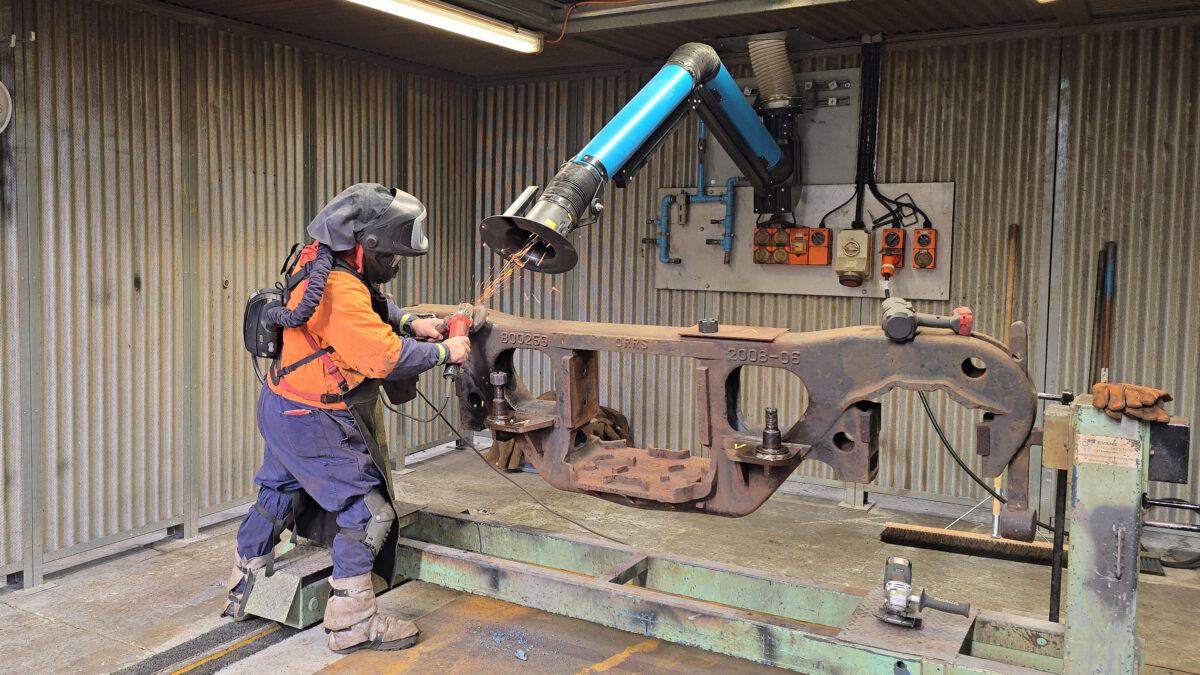
If dust or fume is affecting visibility or air quality in your sandblasting, grinding, or fabrication area, we can help you find the right dust extraction setup for your space. Get in touch with the Egmont Air team to talk through your options.
FAQs
What’s the difference between a crossflow dust collector and other extraction setups?
A crossflow system calibrates airflow through the blast booth to separate heavy, reusable media from fine airborne dust. Heavier garnet or sand falls to the floor for reuse, while lighter respirable particles are drawn into the extraction system. This clears the air so operators can see what they’re doing, without being exposed to the fine dust generated as media and surface material break down.
How fine a dust can a CDC cartridge filter system capture?
Cartridge filtration is designed to catch very fine particles, including powders, fume, and smoke-fine dust — well beyond what a basic bag filter can handle, which is why it’s a common choice for abrasive blasting and metalworking dust.
Is sandblasting dust regulated in New Zealand?
Yes. WorkSafe NZ requires businesses to manage exposure to airborne contaminants, including dust from abrasive blasting. Where silica is present in the media or the substrate being blasted, additional controls apply given the risk of silicosis and other lung disease.
Is combustible dust a fire risk in sandblasting, and how is it managed?
Fine metal and abrasive dust can present an explosion risk if it’s allowed to build up. Dust collectors for blasting applications can be fitted with explosion venting to manage this risk safely.