Overview
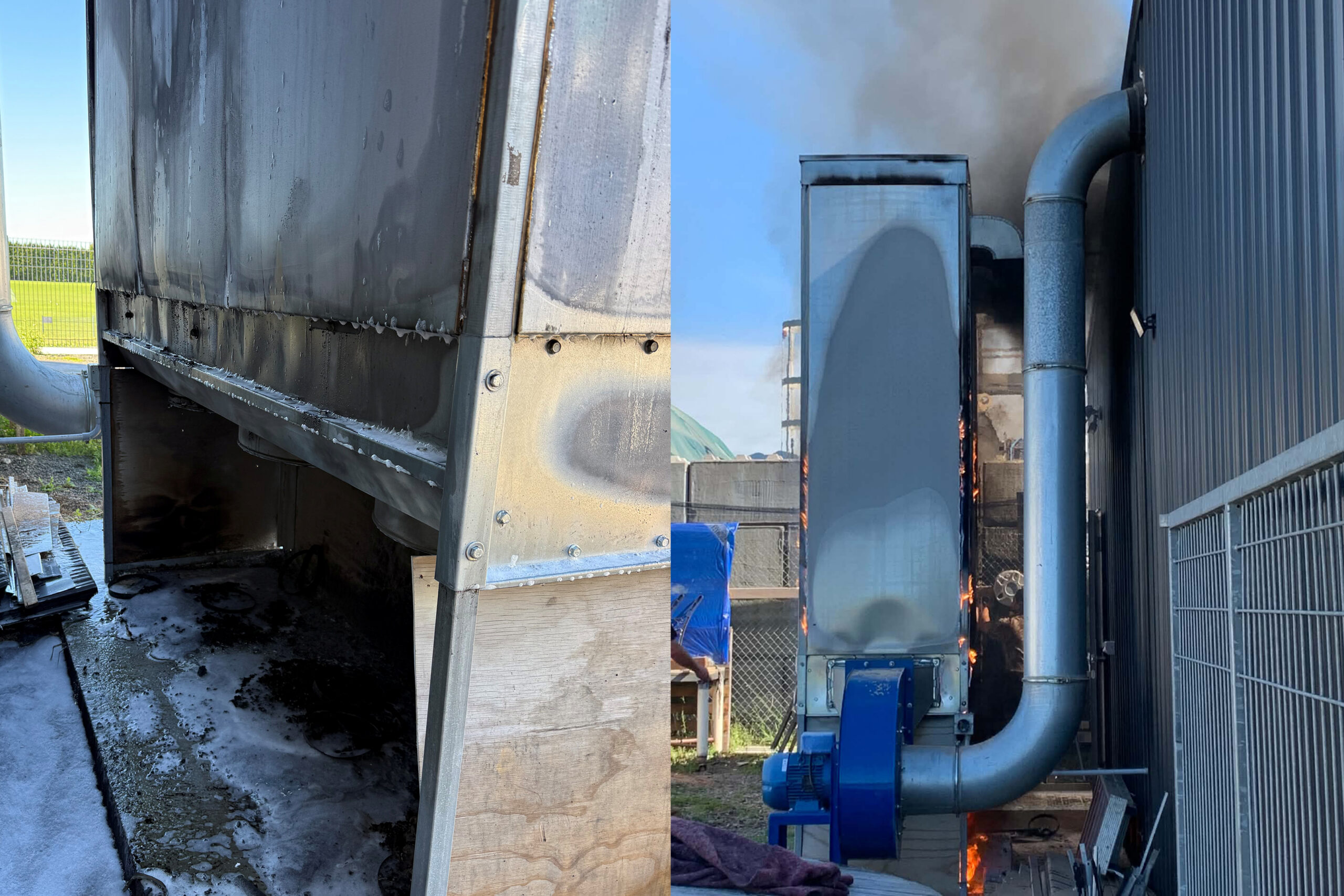
A dust extraction fire is one of those incidents every workshop hopes to avoid — but it’s exactly what happened recently at a community workshop in the Bay of Plenty. A rogue spark made its way into the system, ignited accumulated dust, and the men who keep this much-loved community space running were left without a workshop.
The good news is we will have the place back up and running very soon. The wider story — what causes a dust extraction fire, and how to stop one happening in the first place — is one every workshop owner in New Zealand should know.
About the workshop
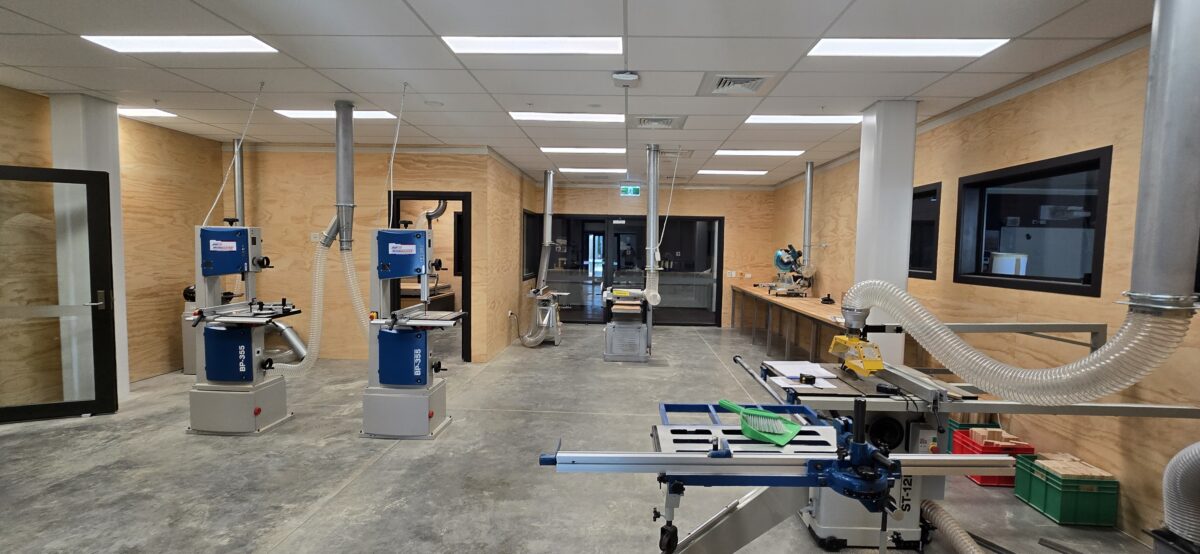
This Bay of Plenty community workshop is one of many across New Zealand that bring local men together to share skills, work on practical projects, and enjoy a bit of fellowship. Members take on community work, repair jobs for the public, and personal projects of their own.
Like any working timber workshop, the shed runs a dust extraction system to keep the air clean and the workspace safe. When that system caught fire, it became a sharp reminder of just how real the risk can be.
A dust extraction system is doing exactly the right job when it pulls fine wood dust away from machinery — but in doing so, it concentrates two of the three things a fire needs: fuel (dust) and oxygen. All it takes is an ignition source, and the system itself can become the fire.
The common causes are:
- Sparks from cutting metal objects. Nails, screws and staples hidden in recycled or salvaged timber are a frequent culprit. A blade strikes the metal, throws a spark, and the spark travels straight into the ductwork.
- Blunt tooling. Dull blades and bits create more friction and heat than sharp ones, increasing the chance of a hot particle ending up in the dust stream.
- General heat and sparks from machinery, bearings, or static discharge inside the ducting.
- Poor maintenance. A neglected system loses suction, dust builds up in the ductwork, and in the wrong conditions that build-up can spontaneously combust — especially with oily or resinous timbers.
In short, a dust extraction system carries an inherent fire risk because of how it works. Managing that risk is about removing the ignition source and limiting the damage if something does get through.
Three measures make the biggest difference:
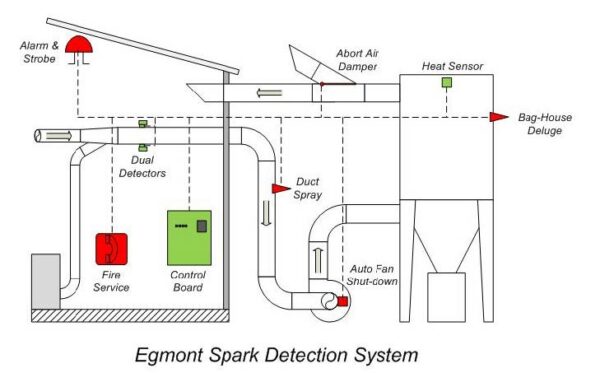
Spark detection systems. Sparks and hot particles travel through ductwork at around 100 km/hr — fast enough to reach a filter in roughly three seconds. Infrared sensors fitted inside the ducting pick up sparks (and friction-heated particles that aren’t glowing hot) within microseconds, and trigger spray nozzles that quench them in under a quarter of a second — well before they reach the filter. Add-on features like alarms, automatic fan shutdown, return-air isolation and filter bag-house deluge round out the protection. It’s the single most effective piece of fire-prevention equipment you can add to a wood dust extraction setup. Read more about our spark detection systems here.
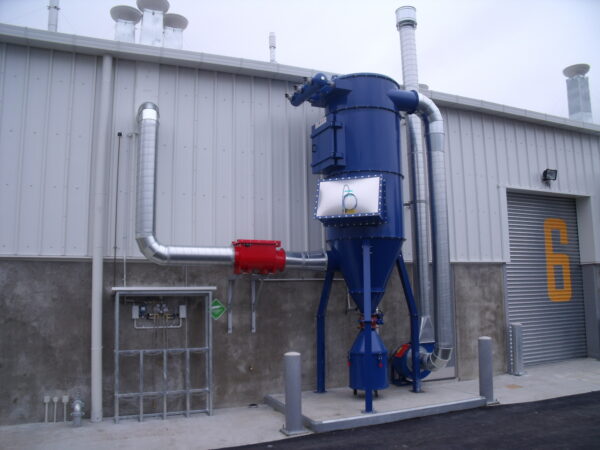
Non-return dampers. Non-return dampers (or non-return valves) are mechanical flaps installed in the ductwork. If a fire or explosion does occur, they close immediately to stop the pressure wave or flames travelling back through the system into the factory or workshop. They protect people first, and the building second.
Sharp tooling, good housekeeping and regular servicing. Keeping blades, bits and cutters sharp reduces friction and sparking. Day-to-day, good housekeeping makes a real difference: regularly emptying dust bags and bins, and inspecting the system weekly or monthly (depending on workload) for anything out of the ordinary — particularly build-up of dust where it shouldn’t be. On top of that, we recommend an annual inspection service for most systems, and a full service with new filter socks supplied and fitted every two to four years, depending on application and industry.
Spark detection and non-return dampers are sold as add-ons, but for any NZ workshop handling timber dust — joiners, cabinet makers, sawmills, school workshops and community sheds — we strongly recommend them. They can be the difference between a near-miss and a serious incident.
Getting the workshop back up and running
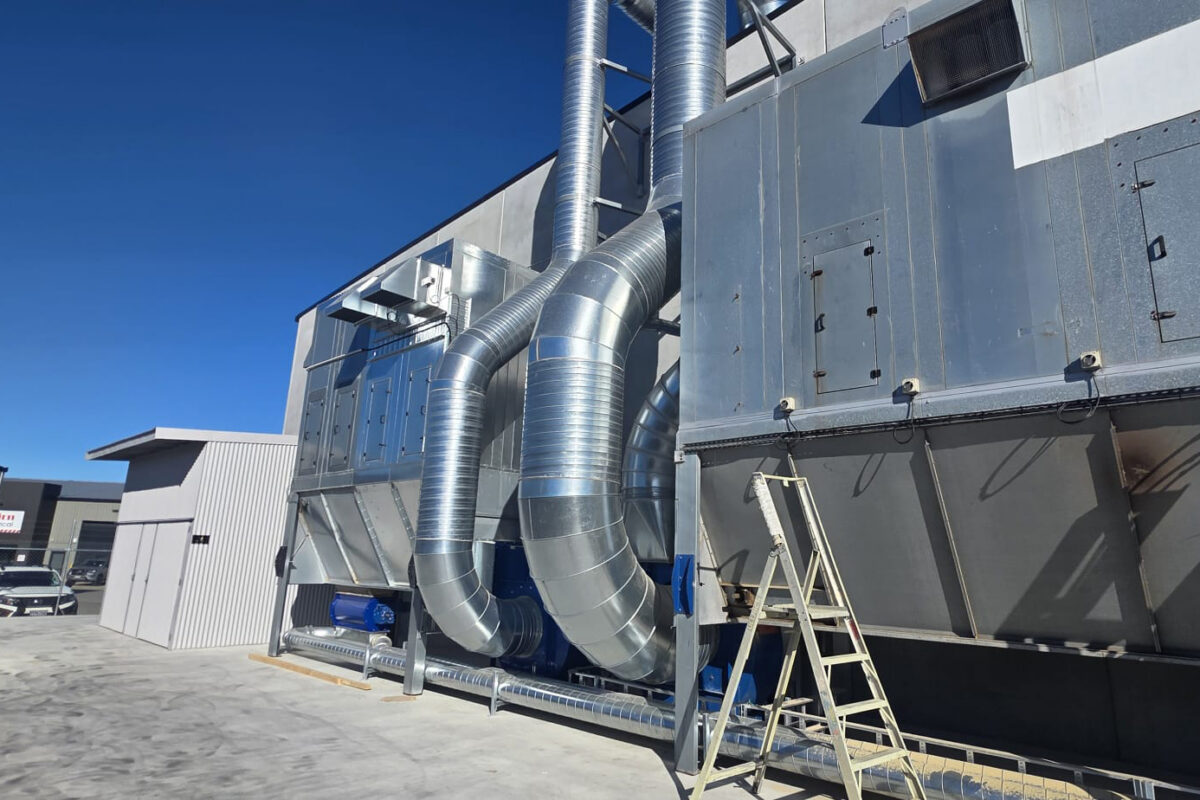
The team has just placed an order for a new dust extraction system. We’ve got the stock, and we’ll have them up and running again very soon. It’s the kind of community workshop New Zealand benefits from having around, and we’re glad to help get them back to building, repairing and sharing skills with their patch of the Bay of Plenty.
Can a dust extraction system actually catch fire? Yes. Wood dust is highly combustible, and a working dust extraction system concentrates both dust and oxygen inside ducting and filters. All it takes is an ignition source — a spark, a hot particle, a smouldering ember from blunt tooling — to start a fire.
What is the most common cause of a dust extraction fire? Sparks from cutting metal objects hidden in timber — nails, screws, staples — are one of the most common causes. Blunt tooling and poorly maintained systems with built-up dust are close behind.
What does a spark detection system do? A spark detection system uses infrared sensors fitted inside the ductwork to detect sparks and hot particles in the airflow. When a spark is detected, the system triggers an automatic extinguishing response — usually a water mist — to put it out before it reaches a filter or storage silo. It’s a proven way to prevent dust extractor fires in workshops handling combustible dust.
What is a non-return damper and why do I need one? A non-return damper is a one-way valve fitted in the ductwork. In normal operation, dust-laden air passes through it freely. If a fire or explosion occurs downstream, the damper closes immediately and stops the flame or pressure wave from travelling back through the system into the building. It protects workers and the rest of the workshop.
How often should a dust extraction system be serviced? We recommend an annual inspection service for most workshops — a site visit to inspect the system, check operation and integrity, identify any wear or maintenance, and quote any work required. A full service, including supply and fit of new filter socks, is generally recommended every two to four years, depending on application, industry and dust loading. Day-to-day, regular housekeeping — emptying dust bags and bins, and keeping an eye out for unusual dust build-up — keeps the system performing well between services.
Worried about the fire risk in your workshop, or thinking about retrofitting spark detection and non-return dampers to an existing dust extraction system? Get in touch with Egmont Air. We design, supply and install fire-mitigated dust extraction systems for joineries, sawmills, schools, community workshops and industrial sites across New Zealand.